Leading China Laser-Welded Finned Tube & Industrial Radiator Manufacturer
 +86-519-83505830
 yangjy@lanchenfinnedtube.com
+86-519-83505830yangjy@lanchenfinnedtube.com

DATE:2026-07-31
When engineers search for a reliable 304/316 Stainless steel H-shaped finned tube China Manufacturer, the real question is usually not only “who can supply the product,” but “which finned tube structure can keep heat transfer stable in corrosive, dusty, high-temperature, or moisture-heavy operating conditions?” For boiler economizers, flue gas coolers, chemical heat exchangers, drying systems, and industrial radiators, material selection and fin structure directly affect service life, maintenance frequency, pressure drop, and long-term energy consumption.
As a focused manufacturer of finned tubes and industrial heat exchange components, Changzhou LanChen Environmental Equipment Co.,Ltd. provides stainless steel H-shaped finned tubes designed for applications where corrosion resistance, mechanical strength, and easy cleaning are important. This guide explains what the product is, how to choose specifications, and where stainless steel H-shaped finned tubes are commonly used.
A stainless steel H-shaped finned tube is a heat exchange tube formed by welding H-shaped stainless steel fins onto a base tube. The base tube carries the internal medium, such as steam, hot water, thermal oil, or process fluid, while the external H-shaped fins enlarge the heat transfer surface and improve heat exchange with flue gas or air.
Compared with ordinary bare tubes, H-shaped finned tubes provide a larger heat dissipation area within a compact installation space. Compared with some traditional fin structures, the H-shaped design offers better structural rigidity and is suitable for environments with dust, ash, moisture, and corrosive gases. For buyers evaluating a 304/316 Stainless steel H-shaped finned tube China Manufacturer, the key selection factors include base tube material, fin material, fin spacing, fin thickness, tube length, working temperature, and corrosion level.
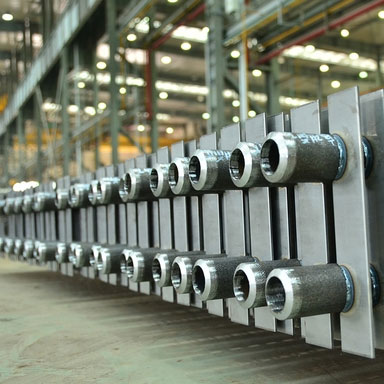
The corrosion-resistant type supplied by Changzhou LanChen is mainly composed of two parts: the base tube and the H-shaped fins. Both components can be selected according to the working medium and external environment.
For mildly corrosive environments, 304 stainless steel is often used because it offers balanced corrosion resistance and cost control. For humid, chloride-containing, acidic, alkaline, or more aggressive industrial gases, 316 or 316L stainless steel is usually preferred due to its stronger corrosion resistance.
| Item | Available Range | Selection Notes |
|---|---|---|
| Base Tube Diameter | φ25, φ32, φ38, φ45, φ57 mm | Selected according to flow rate, pressure drop, and heat exchange area. |
| Base Tube Wall Thickness | 2.0–3.5 mm | Thicker walls are suitable for higher pressure or more demanding service conditions. |
| Fin Height | 10–18 mm | Higher fins increase heat transfer area but should match gas-side resistance requirements. |
| Fin Thickness | 1.0–1.8 mm | Thicker fins improve mechanical strength in dusty or abrasive environments. |
| Fin Spacing | 8–18 mm | Wider spacing helps reduce ash blockage in flue gas and dusty applications. |
| Fixed Length | 2–6 meters | Customized according to heat exchanger layout and installation space. |
For a 304/316 Stainless steel H-shaped finned tube China Manufacturer, dimensional consistency is especially important. Small deviations in tube diameter, fin height, or fin spacing may affect tube bundle assembly, welding alignment, air resistance, and final heat exchanger performance.
In many chemical, environmental protection, waste heat recovery, and drying systems, selecting 316L stainless steel may increase initial material cost, but it can help reduce unplanned maintenance and tube replacement. In suitable working conditions, project owners often focus on lifecycle cost rather than only unit price.
The H-shaped fin structure is often selected for industrial heat exchangers because it combines heat transfer area, mechanical support, and anti-ash performance. In flue gas and dusty air applications, the space between fins allows gas to pass through more smoothly, reducing the risk of severe blockage compared with overly dense fin structures.
Based on project experience in finned tube heat exchange systems, optimized finned tube structures can increase effective heat dissipation area by more than 50% compared with traditional low-efficiency configurations, while compact heat exchanger layouts may reduce equipment footprint significantly. In some retrofit projects, better heat exchange stability also helps lower fan load, cleaning frequency, and long-term operating cost.
Changzhou LanChen Environmental Equipment Co.,Ltd. was founded in 2018 and specializes in the manufacturing of radiators, cooling coils, and finned tubes in different specifications. The company has independently developed stainless steel laser-welded finned tube technology and has accumulated practical experience in industrial heat transfer and waste heat recovery applications.
Although H-shaped finned tubes and laser-welded spiral finned tubes have different structures, Changzhou LanChen’s manufacturing approach follows the same principle: stable welding quality, accurate dimensions, and materials matched to real working conditions. The company currently owns three sets of laser welding machines and has an annual production capacity of about 400,000 meters of finned tubes.
For customers comparing a 304/316 Stainless steel H-shaped finned tube China Manufacturer, these capabilities are important because industrial heat exchangers often require more than standard catalog dimensions. Actual operating temperature, flue gas composition, dust concentration, cleaning method, and pressure level should all be considered before confirming the final specification.
Changzhou LanChen has established a standardized production management and control system and has obtained ISO9001 Quality Management System Certification under GB/T19001:2016 / ISO9001:2015. The certification scope covers the production of finned tubes, and the production process is controlled according to international quality management requirements.
The company’s certification information can be verified through the official platform of the Certification and Accreditation Administration of China. For engineering companies, boiler manufacturers, heat exchanger builders, and industrial end users, this provides an additional basis for supplier evaluation, project documentation, and quality traceability.
Stainless steel H-shaped finned tubes are suitable for heat exchange systems where corrosion resistance and ash-handling performance are both important. A qualified 304/316 Stainless steel H-shaped finned tube China Manufacturer should be able to recommend material and structure based on real working conditions rather than only nominal tube size.
Before ordering stainless steel H-shaped finned tubes, project engineers can use the following checklist to reduce specification errors and procurement risk:
In retrofit projects, correct selection can help reduce cleaning downtime and improve heat recovery performance. Depending on the working condition and original equipment design, customers may see meaningful reductions in maintenance cost and energy consumption. For example, when a poorly matched conventional tube bundle is replaced with a properly designed stainless steel finned tube bundle, a project may target lower system resistance, longer cleaning cycles, and improved heat transfer stability rather than only a lower purchase price.
Changzhou LanChen Environmental Equipment Co.,Ltd. has supplied high-efficiency stainless steel finned tubes and industrial radiators for textile dyeing, chemical processing, synthetic fiber manufacturing, grain and oil processing, and centralized heat exchange projects. In these applications, customers often face severe thermal cycling, corrosive gases, lint, oil residue, dust, and compact installation space.
In textile dyeing and coating lines, smooth and easy-to-clean finned tube surfaces help reduce lint and oil residue accumulation. In chemical and synthetic fiber systems, stainless steel material selection supports corrosion resistance and stable heat transfer. In grain, oil, and centralized heating projects, compact finned tube heat exchangers help improve heat utilization while fitting into limited equipment space.
For the world’s first supercritical CO₂ sintering waste heat power generation demonstration project at Shougang Shuicheng Steel, laser-welded stainless steel finned tube technology was used in customized flue gas heat exchanger applications. The project required reliable heat exchange performance under demanding waste heat recovery conditions, showing the importance of welding quality, dimensional stability, and material compatibility in advanced industrial systems.
You should provide the base tube diameter, wall thickness, fin height, fin thickness, fin spacing, tube length, material grade, working temperature, pressure, medium, gas composition, dust level, and installation drawing if available. This helps the manufacturer recommend a suitable stainless steel H-shaped finned tube instead of a generic specification.
316L usually offers better corrosion resistance than 304, especially in humid, chloride-containing, acidic, or chemical gas environments. However, 304 may be sufficient for general heating, air heating, and moderate industrial conditions. The final choice should be based on corrosion level, service temperature, budget, and expected service life.
Yes. Stainless steel H-shaped finned tubes are commonly used in boiler economizers, flue gas coolers, and waste heat recovery systems. For sulfur-containing, wet, or dusty flue gas, proper material selection, fin spacing, and cleaning design are important to reduce corrosion, ash blockage, and pressure drop.
The common base tube diameters include φ25, φ32, φ38, φ45, and φ57 mm, with wall thickness from 2.0–3.5 mm. Fin height is usually 10–18 mm, fin thickness is 1.0–1.8 mm, fin spacing is 8–18 mm, and fixed tube length is generally 2–6 meters. Changzhou LanChen can customize specifications according to heat exchanger design requirements.
Changzhou LanChen supports customized production of different tube diameters, fin heights, fin spacing, materials, fixed lengths, and special tube structures. With ISO9001-certified production management and experience in boilers, chemical systems, textile drying, waste heat recovery, and environmental protection equipment, the company can provide project-oriented finned tube solutions for demanding industrial applications.

Service hotline+86-519-83505830
Professional China Manufacturer & Supplier of Finned Tubes: Laser-Welded, High-Frequency Welded, Steel-Aluminum Composite, H-Type, Longitudinal, Inlaid Finned Tubes, and Serpentuator Tubes.
Copyright @ 2026-2036 Changzhou LanChen Environmental Protection Equipment Co., Ltd.