Leading China Laser-Welded Finned Tube & Industrial Radiator Manufacturer
 +86-519-83505830
 yangjy@lanchenfinnedtube.com
+86-519-83505830yangjy@lanchenfinnedtube.com

DATE:2026-07-31
Industrial heat exchange is moving toward compact structure, lower energy consumption, and more stable operation under complex working conditions. In this shift, the 20#/Q235B large fin size high heat dissipation Steel-aluminum finned tube China Supplier segment has attracted increasing attention from boiler systems, drying equipment, air heaters, workshop radiators, and centralized heating projects.
Changzhou LanChen Environmental Equipment Co.,Ltd. focuses on the manufacturing of radiators, cooling coils, and finned tube products for industrial heat transfer. Since its establishment in 2018, Changzhou LanChen has continued to improve finned tube production processes, including independently developed stainless steel laser-welded finned tubes and customized heat exchange components for demanding applications.
For applications requiring large heat dissipation area and cost-conscious material selection, steel-aluminum composite finned tubes provide a practical balance. A carbon steel base tube such as 20# or Q235B offers structural strength, while high-aluminum fins such as 1060 aluminum help expand the external heat transfer area and improve air-side heat dissipation.
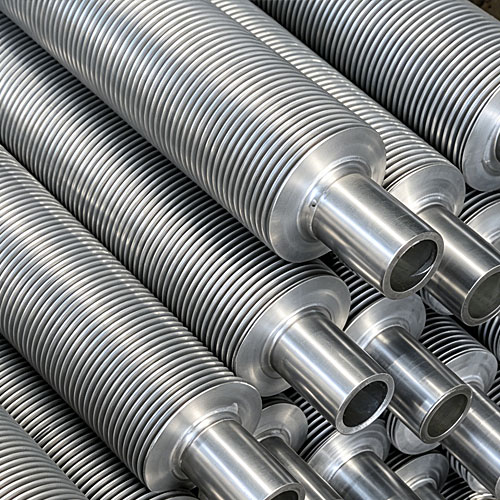
The steel-aluminum composite finned tube is designed with a carbon steel base tube and high-aluminum fins. Common base pipe materials include 20# and Q235B, while the fin material is typically 1060 aluminum. This combination is widely used where heat must be transferred quickly from internal hot water, steam, or thermal oil to external air.
Compared with ordinary smooth tubes, the large fin structure significantly increases the heat dissipation surface. For industrial radiators and air heating equipment, a larger external area means that more heat can be released within a limited installation space. This is one reason why the 20#/Q235B large fin size high heat dissipation Steel-aluminum finned tube China Supplier product category is frequently considered for factory heating, drying rooms, and equipment cooling projects.
Changzhou LanChen manufactures steel-aluminum finned tubes in a practical size range. The base tube diameters can include φ38, φ45, φ57, and φ76 mm, with wall thicknesses from 2.0 to 3.5 mm. Fin height is generally 16–25 mm, fin thickness is 0.5–0.8 mm, fin spacing is 4.0–8.0 mm, and standard length is usually 3–9 m.
| Component | Common Specification | Engineering Value |
|---|---|---|
| Base Tube | 20#, Q235B carbon steel | Provides mechanical strength and pressure-bearing support |
| Base Tube Diameter | φ38, φ45, φ57, φ76 mm | Matches different radiator and heat exchanger designs |
| Wall Thickness | 2.0–3.5 mm | Supports medium-pressure industrial working conditions |
| Fin Material | 1060 aluminum | Improves air-side heat dissipation efficiency |
| Fin Size | Height 16–25 mm, thickness 0.5–0.8 mm | Creates a larger heat exchange area |
| Fin Spacing | 4.0–8.0 mm | Balances heat transfer and air resistance |
Many users still face common problems with traditional finned tubes: unstable fin bonding, limited heat transfer efficiency, high dust accumulation, and frequent maintenance. In high-temperature drying lines or workshop heating systems, these problems are not isolated technical issues. They often cause shutdowns, uneven heating, and rising long-term operating costs.
In some factories, operators report that conventional finned tubes perform well during the first stage of operation but gradually lose efficiency after dust, oil mist, or oxidation accumulates around the fin root. Once thermal resistance increases, the system requires more steam, hot water, or fan power to maintain the same output. For enterprises under energy-saving and carbon-reduction pressure, this directly affects production cost control.
The 20#/Q235B large fin size high heat dissipation Steel-aluminum finned tube China Supplier solution addresses this problem from the structure itself. Large aluminum fins increase air contact area, while carbon steel base tubes provide a stable heat conduction path. When matched with proper fin spacing, air flow can remain relatively smooth, reducing unnecessary resistance and helping equipment maintain stable heat exchange performance.
Supply chain risk is another concern. Industrial heat exchange projects often require consistent dimensions, predictable delivery, and clear material specifications. Changzhou LanChen supports customized production according to pipe diameter, fin height, fin spacing, length, and equipment installation requirements, helping reduce mismatch risks during assembly and site installation.
Steel-aluminum composite finned tubes are commonly used in large heating radiators, hot blast stoves, drying rooms, grain and material drying equipment, industrial air heaters, and workshop heating systems. Their value is most visible in scenarios where air-side heat exchange is the bottleneck and equipment space is limited.
For textile dyeing and coating production lines, heat exchangers often operate in environments with lint, oil vapor, and rapid temperature changes. Changzhou LanChen has supplied heat exchange components for textile dyeing, printing, coating, chemical processing, synthetic fiber, grain and oil processing, and industrial park heating projects. These field applications help form a practical understanding of maintenance cycles, dust control, and thermal stability.
In a textile finishing project, stainless steel laser-welded finned tube units were used for exhaust gas heat recovery and air-to-air heat exchangers. Compared with previous high-frequency welded components, the smoother surface helped reduce lint and oil residue accumulation. Maintenance downtime was reported to decrease by about 30%, while heat recovery stability improved during frequent hot-and-cold operating cycles.
In another drying equipment upgrade for a technical textile coating line, compact finned tube bundles with narrow fin spacing increased total heat dissipation area by more than 50% within the existing cabinet size. The client’s equipment manager noted that line speed improved by around 25% after the heat exchanger was optimized, while the assembled heat exchange volume was reduced significantly compared with the earlier layout.
Product failure in finned tube systems usually begins with small structural defects: loose fins, poor contact, burrs, deformation, or inconsistent spacing. Under long-term vibration and repeated cold-heat alternation, these defects may develop into heat exchanger performance loss or equipment leakage. For production managers, the issue is less about one component and more about the reliability of the entire system.
Changzhou LanChen’s broader manufacturing experience includes stainless steel laser-welded finned tubes with full automated and mechanized welding. In this process, fins and base tubes are fused by laser welding, with penetration depth greater than 0.2 mm and a 100% welding bonding rate. While steel-aluminum composite finned tubes have different structural characteristics, the company’s accumulated heat exchange manufacturing experience helps improve process control and dimensional consistency.
For the 20#/Q235B large fin size high heat dissipation Steel-aluminum finned tube China Supplier market, consistent fin size and stable tube dimensions are especially important. If the fin pitch is too irregular, air flow distribution becomes uneven. If the base tube wall thickness is insufficient, system safety margins may be affected. Standardized production and clear parameter confirmation reduce these risks before installation.
From a maintenance perspective, large fin structures must balance heat transfer area and dust tolerance. In dusty environments such as grain drying, flue gas preheating, or material drying, overly dense fins may increase blockage risk. Practical design should consider air velocity, dust concentration, cleaning method, and allowable pressure drop rather than pursuing fin area alone.
Energy conservation and emissions reduction policies are encouraging factories to recover waste heat, reduce steam consumption, and improve the efficiency of existing heat exchange equipment. This creates demand for more compact and efficient heat transfer components, especially in boilers, air preheaters, drying systems, and industrial heating networks.
At the same time, equipment manufacturers are under pressure to shorten delivery cycles and control procurement costs. Imported high-end heat exchange components may provide strong performance, but long lead times and after-sales complexity can affect project schedules. Domestic suppliers with stable process control are therefore becoming more important in heat exchange equipment supply chains.
Changzhou LanChen has established a standardized production management and control system and obtained ISO9001 Quality Management System Certification under GB/T19001:2016 / ISO9001:2015. The certification scope covers finned tube production, and the credentials can be verified through the official platform of the Certification and Accreditation Administration of China. This provides a useful reference for buyers evaluating supplier management capability.
For buyers searching for a 20#/Q235B large fin size high heat dissipation Steel-aluminum finned tube China Supplier, certification is not the only factor, but it helps support material traceability, process stability, and project acceptance. In industrial supply chains, these details often determine whether a heat exchanger project runs smoothly after installation.
In the world’s first supercritical CO₂ sintering waste heat power generation demonstration project, customized stainless steel spiral finned tubes were used in the flue gas heat exchanger. Conventional high-frequency welding technology faced challenges such as low fin bonding rate, insufficient tensile strength, blackened tube surface, and bending deformation. Laser welding helped address these problems through stronger bonding, cleaner surface condition, and better dimensional stability.
Although this case involves stainless steel laser-welded finned tubes rather than steel-aluminum composite tubes, it reflects an important industry direction: heat exchange components must increasingly support compact design, harsh working conditions, and stable long-term performance. The same thinking applies when selecting large fin steel-aluminum tubes for heating and drying equipment.
A production manager from a grain and oil processing enterprise commented that after replacing older radiator components, the workshop heating response became more stable, and seasonal maintenance work was easier to schedule. According to the project feedback, steam consumption was reduced by approximately 18% under comparable operating conditions, while cleaning frequency was reduced due to better air-side design.
In a chemical processing cooling project, customized finned tube assemblies helped improve thermal exchange capacity within limited installation space. The engineering team reported that equipment layout changes were reduced, and installation efficiency improved by about 20% compared with the original replacement plan. These results show why selecting the right tube structure at the design stage can reduce hidden costs later.
Before selecting a finned tube, buyers should first clarify the working medium, temperature range, pressure level, air volume, dust content, and installation space. A product that performs well in clean air heating may not be suitable for dusty flue gas or oily exhaust systems. Matching the tube to the working condition is more important than selecting a single “high performance” specification.
For large fin steel-aluminum tubes, several parameters deserve close attention: base tube diameter, wall thickness, fin height, fin thickness, fin spacing, overall length, and assembly method. In many cases, a moderate fin pitch can provide a more stable balance between heat transfer and maintenance convenience than an overly dense fin structure.
Changzhou LanChen can provide customized finned tube production based on engineering requirements, including different pipe diameters, fin heights, fin spacing, materials, and fixed lengths. This flexibility helps equipment manufacturers and project contractors improve compatibility with radiators, air heaters, heat exchangers, and drying systems.
The development of industrial heat exchange is not only about increasing heat transfer area. It is also about structural reliability, material matching, air-side resistance, cleaning convenience, and predictable supply. The 20#/Q235B large fin size high heat dissipation Steel-aluminum finned tube China Supplier product direction fits this practical trend by combining carbon steel strength with aluminum fin heat dissipation capability.
Changzhou LanChen brings experience from radiators, cooling coils, laser-welded finned tubes, and customized industrial heat exchange projects. With ISO9001-certified production management and field applications across textile, chemical, fiber, grain and oil, and waste heat recovery sectors, the company provides a stable manufacturing basis for heat exchange components used in demanding industrial environments.
For factories upgrading drying systems, air heaters, radiators, or waste heat recovery equipment, steel-aluminum composite finned tubes offer a useful balance between heat dissipation, cost control, and installation adaptability. When material specifications, fin geometry, and working conditions are properly matched, the result is not only better heat transfer, but also lower maintenance pressure and more predictable equipment operation.

Service hotline+86-519-83505830
Professional China Manufacturer & Supplier of Finned Tubes: Laser-Welded, High-Frequency Welded, Steel-Aluminum Composite, H-Type, Longitudinal, Inlaid Finned Tubes, and Serpentuator Tubes.
Copyright @ 2026-2036 Changzhou LanChen Environmental Protection Equipment Co., Ltd.