Leading China Laser-Welded Finned Tube & Industrial Radiator Manufacturer
 +86-519-83505830
 yangjy@lanchenfinnedtube.com
+86-519-83505830yangjy@lanchenfinnedtube.com

DATE:2026-07-31
In industrial heat exchange equipment, the finned tube is often a small component with a large impact. For projects involving air heating, process cooling, drying, flue gas heat recovery, or radiator replacement, choosing the right tube structure affects thermal efficiency, maintenance frequency, equipment footprint, and long-term operating cost.
As a 304/316L High-frequency welded finned tube China Supplier, Changzhou LanChen Environmental Equipment Co.,Ltd. focuses on finned tubes, radiators, cooling coils, and customized heat exchange components. The company was founded in 2018 and has developed both high-frequency welded finned tube solutions and stainless steel laser-welded finned tube technology for demanding working conditions.
The product discussed here is the High-frequency welded stainless steel aluminum composite finned tube, typically made with a stainless steel base tube and aluminum fins. It is designed for applications where corrosion resistance, light weight, good heat transfer, and stable dimensional performance need to be balanced within a practical project budget.
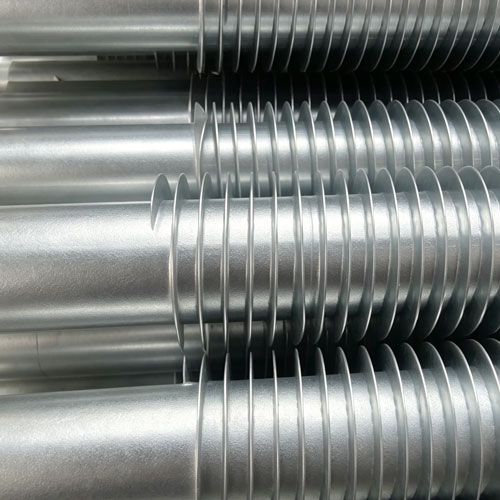
The high-frequency welded stainless steel aluminum composite finned tube uses a 304 or 316L stainless steel base tube as the pressure-bearing and corrosion-resistant body. Aluminum strip is used as the fin material because of its good thermal conductivity and lighter weight compared with many steel fin structures.
During production, the aluminum fin strip is continuously formed and welded onto the outer surface of the stainless steel tube. The process increases the external heat exchange area while keeping the base tube suitable for water, steam, hot oil, or other compatible media. For many heat exchangers, this structure provides a practical balance between thermal performance and equipment weight.
For buyers evaluating a 304/316L High-frequency welded finned tube China Supplier, the key is not only the material grade but also the consistency of welding, fin spacing, tube straightness, and dimensional tolerance. Poor control in any of these areas can lead to uneven airflow, higher resistance, difficult installation, and unstable heat exchange performance.
| Item | Specification Range |
|---|---|
| Base Tube Material | 304 stainless steel, 316L stainless steel |
| Fin Material | Aluminum strip |
| Base Tube Diameter | φ25, φ32, φ38, φ45, φ57 mm |
| Wall Thickness | 2.0–3.5 mm |
| Fin Height | 10–18 mm |
| Fin Thickness | 0.4–0.8 mm |
| Fin Spacing | 3–7 mm |
| Fixed Length | 3–9 m |
These parameters allow the tube to be adapted to radiators, air heaters, drying equipment, waste heat recovery units, and industrial cooling sections. Changzhou LanChen can also adjust tube length, fin pitch, and material selection according to working temperature, medium characteristics, airflow volume, and equipment layout.
Many equipment users first notice finned tube problems through maintenance records rather than design drawings. Traditional finned tubes may show loose fins, uneven heat transfer, dust accumulation, or weld oxidation after long-term operation. In factories that run continuously, these issues can lead to unplanned shutdowns and higher labor costs.
Another common pain point is the decline of heat transfer efficiency. At the beginning of operation, a heat exchanger may meet the expected output, but dust, oxidation, gaps at the fin root, and unstable welding quality gradually increase thermal resistance. As a result, fans, boilers, or heating systems consume more energy to maintain the same process temperature.
Supply chain uncertainty also affects procurement decisions. Some buyers report that product labels, material thickness, fin density, or welding processes are not always consistent with the quotation. For an engineering contractor, choosing a reliable 304/316L High-frequency welded finned tube China Supplier helps reduce risks during project acceptance, installation, and later maintenance.
Energy-saving renovation, waste heat utilization, and emission reduction requirements are changing how factories evaluate heat exchange equipment. In boiler systems, textile drying lines, chemical plants, and centralized heating projects, the finned tube is no longer judged only by purchase price. Its influence on fuel use, fan power, cleaning cycles, and service life is also included in the total cost calculation.
For equipment operating in humid, dusty, acidic, alkaline, or sulfur-containing environments, corrosion resistance becomes especially important. 304 stainless steel is commonly used in general corrosion-resistant applications, while 316L stainless steel is often considered when chloride, humidity, or chemical exposure is more demanding.
Changzhou LanChen approaches these conditions with both conventional high-frequency welded composite tube production and independently developed laser-welded stainless steel finned tube technology. This gives engineers more room to choose a suitable process rather than applying one tube type to every working condition.
Changzhou LanChen has built its production around controlled welding, stable dimensions, and material traceability. For high-frequency welded stainless steel aluminum composite finned tubes, process control focuses on the bonding quality between fin and tube, straightness after forming, fin pitch consistency, and surface condition.
For more severe working conditions, the company also manufactures stainless steel laser-welded finned tubes. In this process, fins and base tubes are joined through automated laser fusion welding. The penetration depth can exceed 0.2 mm, helping improve the bonding rate and reducing the risk of fin loosening during frequent hot-and-cold cycling.
The laser-welded structure is especially relevant when traditional high-frequency welded tubes face limits in high-temperature flue gas, vibration, or compact heat exchanger designs. Compared with conventional high-frequency welded finned tubes, Changzhou LanChen’s laser-welded tubes can control fin spacing at ≤1.8 mm, expand heat dissipation area by more than 50%, and reduce the assembled equipment volume in suitable designs.
When a project needs a 304/316L High-frequency welded finned tube China Supplier, the selection often begins with stainless steel base tube grade, aluminum fin size, and installation space. When the working condition is more complex, Changzhou LanChen can also discuss whether a laser-welded stainless steel finned tube would be more suitable for long-term stability.
In the textile dyeing and finishing sector, lint, oil residue, and rapid temperature changes often make heat exchanger maintenance difficult. A dyeing and printing division of a listed textile enterprise used stainless steel laser-welded finned tubes in stenter frame exhaust gas heat recovery. After replacing conventional high-frequency welded tubes, the heat exchanger surface was easier to clean, and maintenance downtime was reduced during continuous production periods.
In a technical textile coating line, compact finned tube bundles with narrow fin spacing helped increase the available heat dissipation area by more than 50% within the existing cabinet space. The user reported that the upgraded heat exchanger supported higher line speed, while the assembled heat exchanger volume was reduced by about two-thirds compared with the previous layout.
A chemical processing customer applied stainless steel finned tube assemblies in process cooling and gas heat exchange sections. Under humid and corrosive operating conditions, corrosion resistance and weld stability became more important than initial equipment cost. According to the equipment maintenance manager, the main improvement was not only heat exchange output, but also the reduction of unexpected inspection work.
Mr. Zhang, equipment manager at a textile finishing company, commented that the previous radiator system required frequent cleaning because lint and oil residue accumulated around rough fin roots. After the replacement, cleaning intervals became longer, the heat output stayed more stable, and the workshop reported fewer temperature fluctuations during peak production.
In another industrial drying project, the engineering team compared operating data before and after a heat exchanger upgrade. Under similar production load, fuel consumption was reduced by about 30%, while drying section throughput increased by roughly 25%. The improvement came from a combination of larger heat exchange area, better airflow distribution, and more stable tube-fin bonding.
These cases do not mean every project will achieve the same figures. However, they show why buyers increasingly review finned tube process details, material certificates, fin spacing, and welding quality before placing orders with a 304/316L High-frequency welded finned tube China Supplier.
Changzhou LanChen Environmental Equipment Co.,Ltd. has obtained ISO9001 Quality Management System Certification under GB/T19001:2016 / ISO9001:2015. The certification scope covers the production of finned tubes, and the relevant credentials can be verified through the official platform of the Certification and Accreditation Administration of China.
For procurement teams, certification is only one part of supplier evaluation. More practical details include whether the supplier can provide transparent parameters, stable wall thickness, consistent fin density, production records, and quality inspection data. These factors help reduce disputes during project acceptance and after-sales service.
Changzhou LanChen currently owns three laser welding machines and has an annual production capacity of about 400,000 meters of finned tubes. This production base supports both batch supply and customized engineering needs, including stainless steel base tubes, alloy steel options, special fin spacing, fixed-length tubes, and heat exchanger matching solutions.
For international buyers searching for a 304/316L High-frequency welded finned tube China Supplier, these steps help turn a general product inquiry into a clearer technical specification. They also make it easier to compare quotations based on process capability rather than only unit price.
High-frequency welded stainless steel aluminum composite finned tubes are suitable for many standard heating, cooling, and radiator applications. Their stainless steel base tube provides corrosion resistance, while aluminum fins contribute to heat dissipation and weight control. For moderate working conditions, this structure remains a practical option.
Laser-welded stainless steel finned tubes are often considered when the working environment involves frequent thermal cycling, high flue gas temperature, vibration, dust, or stricter heat transfer stability requirements. The fully automated welding process creates a tight connection between fin and tube, which helps reduce thermal resistance and fin loosening risk.
The selection is not a simple question of which process is newer. It depends on medium temperature, pressure, corrosion level, airflow cleanliness, cleaning method, equipment space, and expected service cycle. Changzhou LanChen usually evaluates these factors together to recommend a structure that fits the actual working condition.
For example, a factory radiator replacement with limited budget and moderate temperature may choose a 304/316L high-frequency welded stainless steel aluminum composite finned tube. A boiler flue gas waste heat recovery project with high dust and repeated thermal shock may be more suitable for stainless steel laser-welded finned tubes.
A finned tube may look simple from the outside, but its performance depends on material selection, welding quality, fin geometry, dimensional control, and working-condition matching. For buyers comparing a 304/316L High-frequency welded finned tube China Supplier, these process details are closely related to maintenance cost, energy consumption, and equipment reliability.
Changzhou LanChen combines high-frequency welded stainless steel aluminum composite finned tube production with independently developed laser-welded finned tube technology. Its product range covers radiators, cooling coils, heat recovery units, air heaters, drying systems, and customized industrial heat exchange components.
With ISO9001-certified production management, multiple material options, and project experience in textile dyeing, chemical processing, grain and oil production, industrial parks, and supercritical CO₂ waste heat power generation, Changzhou LanChen provides a technically grounded reference for companies upgrading heat exchange equipment.
For projects where space, energy use, cleaning frequency, and service life all matter, selecting the right finned tube process can make the heat exchange system more stable and easier to maintain. That is where Changzhou LanChen’s experience in both high-frequency welded and laser-welded finned tube manufacturing becomes valuable for engineering decisions.

Service hotline+86-519-83505830
Professional China Manufacturer & Supplier of Finned Tubes: Laser-Welded, High-Frequency Welded, Steel-Aluminum Composite, H-Type, Longitudinal, Inlaid Finned Tubes, and Serpentuator Tubes.
Copyright @ 2026-2036 Changzhou LanChen Environmental Protection Equipment Co., Ltd.