Leading China Laser-Welded Finned Tube & Industrial Radiator Manufacturer
 +86-519-83505830
 yangjy@lanchenfinnedtube.com
+86-519-83505830yangjy@lanchenfinnedtube.com

DATE:2026-07-29
In boiler air preheaters, flue gas heat recovery units, chemical heat exchangers, and high-temperature drying systems, the choice of finned tube often determines how stable the equipment will remain after years of thermal cycling. The High-Frequency Welded 12Cr1MoV 15CrMo 10CrMo910 Alloy Steel Finned Tube is commonly used where heat resistance, pressure-bearing performance, and structural reliability are required at the same time.
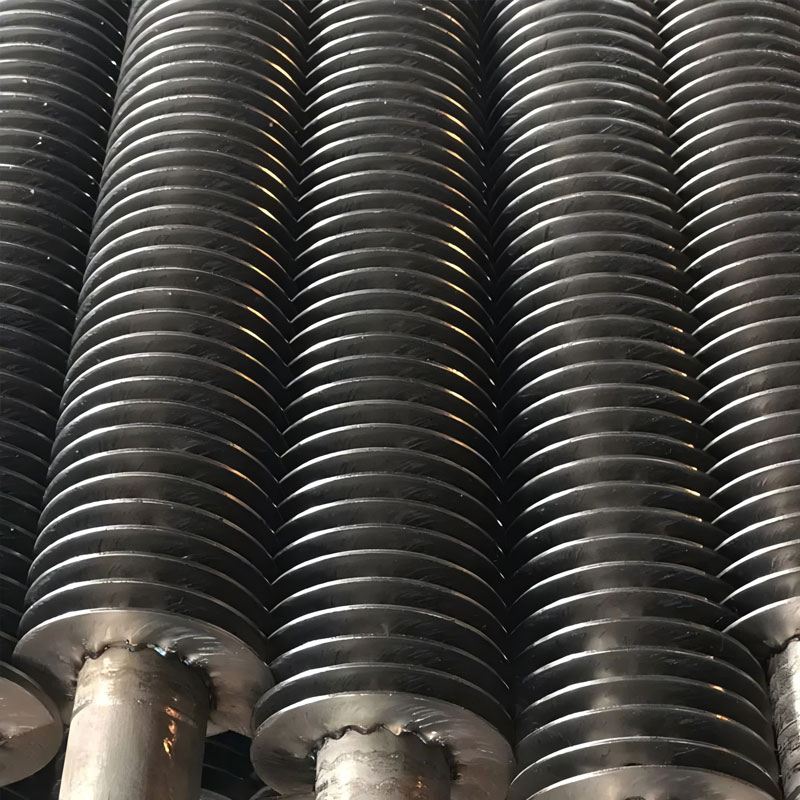
This type of finned tube is generally composed of a base tube and continuously welded fins. The base tube may use 12Cr1MoV, 15CrMo, or 10CrMo910, while the fins are usually made from alloy steel strips or heat-resistant steel strips. Through high-frequency welding, the fin strip is bonded to the tube surface, increasing the external heat exchange area and improving heat transfer between the internal medium and surrounding gas flow.
Changzhou LanChen Environmental Equipment Co.,Ltd. has long focused on finned tube manufacturing for industrial radiators, cooling coils, and heat exchange systems. While the company is known for independently developed stainless steel laser-welded finned tubes, its process knowledge also helps customers evaluate when a High-Frequency Welded 12Cr1MoV 15CrMo 10CrMo910 Alloy Steel Finned Tube is suitable and when laser-welded structures may be more appropriate for demanding operating conditions.
Material matching is the first step in finned tube design. In high-temperature boiler flue gas systems, alloy steel base tubes such as 12Cr1MoV and 15CrMo are often selected for their heat-resistant properties. For certain European-standard or imported-equipment replacement projects, 10CrMo910 is also considered because of its compatibility with specific thermal and pressure requirements.
The typical size range of the High-Frequency Welded 12Cr1MoV 15CrMo 10CrMo910 Alloy Steel Finned Tube covers base tube diameters including φ38, φ42, φ51, φ57, φ63, φ76, and φ89 mm, with wall thickness generally from 3.0 mm to 6.0 mm. Fin height may range from 10 mm to 22 mm, fin thickness from 1.0 mm to 1.5 mm, and fin spacing from 4 mm to 9 mm. Fixed tube length is usually between 3 m and 9 m.
For equipment manufacturers, these specifications are not only dimensional data. They influence air resistance, heat transfer area, ash accumulation, welding stability, equipment footprint, and installation convenience. A 12Cr1MoV 15CrMo 10CrMo910 Alloy Steel Finned Tube China supplier with stable production control needs to balance these parameters instead of simply increasing fin density or reducing wall thickness.
| Component | Common Options | Technical Considerations |
|---|---|---|
| Base Tube | 12Cr1MoV, 15CrMo, 10CrMo910 | Heat resistance, pressure bearing, medium compatibility |
| Fins | Alloy steel strips, heat-resistant steel strips | Heat dissipation area, weld strength, dust resistance |
| Fin Size | Height 10–22 mm, thickness 1.0–1.5 mm | Thermal efficiency, airflow resistance, cleaning interval |
| Tube Length | 3–9 m | Heat exchanger layout, transport, installation tolerance |
Many problems with finned tubes do not appear during procurement. They emerge after months of high-temperature operation, especially in boiler exhaust, chemical waste gas, sulfur-containing flue gas, dusty gas flow, or humid environments. Traditional high-frequency welded, wound, and embedded finned tubes may face fin loosening, fin warping, or partial detachment when exposed to vibration and repeated cold-hot alternation.
Another frequent issue is heat transfer attenuation. At the beginning of operation, a heat exchanger may reach the expected performance. After oxidation, dust accumulation, and thermal stress, however, thermal resistance at the fin root can increase. When the weld surface has burrs or uneven joints, dust and scale may collect faster, raising air resistance and fan energy consumption.
Procurement risk is also a common concern. Some projects struggle with inconsistent wall thickness, unclear material reports, irregular fin spacing, or products labeled as laser-welded when they are actually high-frequency welded. For this reason, choosing a reliable 12Cr1MoV 15CrMo 10CrMo910 Alloy Steel Finned Tube China supplier requires more than comparing unit prices; it requires checking process records, material certificates, welding quality, and dimensional consistency.
Changzhou LanChen was founded in 2018 and specializes in radiators, cooling coils, and finned tubes for industrial heat exchange systems. The company currently operates three laser welding machines and has an annual production capacity of approximately 400,000 meters of finned tubes. Its manufacturing experience covers heat dissipation, air heating, waste heat recovery, equipment cooling, and customized heat exchanger matching.
For high-temperature alloy steel applications, Changzhou LanChen helps customers evaluate whether a High-Frequency Welded 12Cr1MoV 15CrMo 10CrMo910 Alloy Steel Finned Tube can meet the operating requirements. In many conventional boiler and heat recovery systems, high-frequency welded alloy steel finned tubes remain a practical option due to their mature process, broad material compatibility, and adaptable size range.
For harsher working conditions, the company’s stainless steel laser-welded finned tube process provides another route. Laser fusion welding enables full bonding between the fins and base tube, with a penetration depth greater than 0.2 mm and a 100% welding bonding rate. The smooth, burr-free weld surface helps reduce dust accumulation and supports stable heat transfer under frequent hot-cold exchange.
In practical engineering selection, the question is not simply whether high-frequency welding or laser welding is better. The more important question is which process matches the medium, temperature, pressure, flue gas composition, cleaning cycle, and service life expectation. Changzhou LanChen uses this process-based approach to help avoid oversized equipment, unstable performance, and unnecessary maintenance costs.
In heat exchange projects, small structural differences can lead to measurable long-term results. Compared with traditional high-frequency welded finned tubes, laser-welded finned tubes developed by Changzhou LanChen can control fin spacing at ≤1.8 mm in suitable designs, expanding the heat dissipation area by more than 50%. In compact equipment layouts, the assembled heat exchanger volume may be reduced by up to two-thirds.
Fin thickness can also be controlled at ≤0.5 mm for laser-welded stainless steel finned tubes, helping reduce material consumption by more than 50% compared with conventional structures. For projects where space and energy cost are both critical, this can support lower equipment weight, reduced installation difficulty, and more flexible heat exchanger design.
In one textile drying system upgrade, the plant reported that replacing conventional units with compact finned tube bundles helped reduce cleaning downtime and stabilize outlet air temperature. According to the maintenance manager of a textile finishing company, the new heat exchange section reduced unplanned cleaning frequency and contributed to an estimated 30% reduction in maintenance-related cost across one operating season.
In another industrial heating retrofit, a workshop radiator system using optimized finned tube banks achieved more uniform air heating. The equipment manager reported that drying line throughput improved by about 25% after airflow distribution and heat exchange efficiency were adjusted. These figures vary by project design, but they show why material, fin spacing, weld quality, and cleaning performance should be evaluated together.
A notable application case involved the world’s first supercritical CO₂ sintering waste heat power generation demonstration project at Shougang Shuicheng Steel. The project required customized small-diameter stainless steel spiral finned tubes for a flue gas heat exchanger. Conventional high-frequency welding faced challenges such as low bonding rate, insufficient tensile strength, surface discoloration, and tube deformation during assembly.
Changzhou LanChen’s laser welding process addressed these issues with stable fin-to-tube bonding, high joint strength, non-discolored tube surfaces, and controlled deformation. For a supercritical CO₂ waste heat power generation system, the flue gas heat exchanger is a core component, and tube reliability directly affects long-term operation safety and power generation efficiency.
In textile dyeing and coating applications, stainless steel laser-welded finned tubes have been used in stenter frame exhaust gas heat recovery, drying radiators, fabric coating lines, and curing tunnels. Several textile and coating plants adopted smooth, wrinkle-free finned tube surfaces to reduce lint, oil residue, and dust adhesion. This helped extend cleaning intervals and improve thermal stability during repeated heating and cooling.
Chemical and synthetic fiber projects have different priorities. In nylon, acrylic fiber, agrochemical, and vapor condensation systems, corrosion resistance and thermal stress stability are often more important than compactness alone. For these conditions, Changzhou LanChen provides material selection support for carbon steel, stainless steel, ND steel, and alloy steel options, including structures related to High-Frequency Welded 12Cr1MoV 15CrMo 10CrMo910 Alloy Steel Finned Tube applications.
Changzhou LanChen Environmental Equipment Co.,Ltd. has obtained ISO9001 Quality Management System Certification under GB/T19001:2016 / ISO9001:2015, with certification scope covering the production of finned tubes. The certification can be verified through the official platform of the Certification and Accreditation Administration of China.
For industrial customers, certification is only one part of supply chain evaluation. Batch consistency, material traceability, welding process records, wall thickness control, fin spacing accuracy, and dimensional tolerances are equally important. A dependable 12Cr1MoV 15CrMo 10CrMo910 Alloy Steel Finned Tube China supplier should be able to provide transparent parameters instead of vague claims.
Supply chain pain points often appear when replacement parts must match existing imported or non-standard equipment. If the tube diameter, fin height, fin pitch, or fixed length deviates from design drawings, installation may be delayed and commissioning results may change. Changzhou LanChen supports customized pipe diameters, fin heights, fin spacing, fixed lengths, serpentine tubes, longitudinal tubes, and special-shaped tubes to improve compatibility across different heat exchanger designs.
For process engineers, the High-Frequency Welded 12Cr1MoV 15CrMo 10CrMo910 Alloy Steel Finned Tube is often considered when alloy steel strength, heat resistance, and mature manufacturing cost need to be balanced. It is suitable for many boiler-related heat exchange systems, air preheaters, industrial radiators, and waste heat recovery units where operating parameters are within the designed range.
When the project faces severe dust accumulation, frequent cold-hot shock, limited installation space, or high requirements for smooth weld surfaces, laser-welded finned tubes may offer additional advantages. The lower thermal resistance at the fin root, compact fin spacing, and smooth weld profile can help maintain stable efficiency over longer operating cycles.
The practical selection should be based on the working medium, temperature, pressure, flue gas composition, cleaning method, maintenance interval, and expected service life. Changzhou LanChen combines experience in alloy steel finned tubes and stainless steel laser-welded finned tubes to provide process-oriented matching for boilers, chemical equipment, drying systems, textile heat recovery, environmental treatment equipment, and industrial cooling or heating units.
In summary, Changzhou LanChen’s value lies in its understanding of both product structure and working condition behavior. From the High-Frequency Welded 12Cr1MoV 15CrMo 10CrMo910 Alloy Steel Finned Tube to laser-welded stainless steel finned tubes, the company focuses on weld stability, material suitability, heat transfer performance, and long-term maintenance convenience.
For industries pursuing stable heat recovery, compact equipment layout, and controlled operating costs, finned tube selection should start with process requirements rather than appearance alone. With standardized production, ISO9001-certified management, and experience across waste heat recovery, textile drying, chemical processing, and centralized heating projects, Changzhou LanChen provides a practical reference for engineers comparing alloy steel finned tube solutions in China.

Service hotline+86-519-83505830
Professional China Manufacturer & Supplier of Finned Tubes: Laser-Welded, High-Frequency Welded, Steel-Aluminum Composite, H-Type, Longitudinal, Inlaid Finned Tubes, and Serpentuator Tubes.
Copyright @ 2026-2036 Changzhou LanChen Environmental Protection Equipment Co., Ltd.