Leading China Laser-Welded Finned Tube & Industrial Radiator Manufacturer
 +86-519-83505830
 yangjy@lanchenfinnedtube.com
+86-519-83505830yangjy@lanchenfinnedtube.com

DATE:2026-07-29
For engineers and procurement teams, choosing a High-frequency welded stainless steel 304L 316L finned tubes China manufacturer is no longer only about matching diameter, fin height, and delivery time. In boiler air preheaters, textile drying lines, chemical process coolers, and waste heat recovery systems, finned tubes must also withstand vibration, thermal cycling, dust, moisture, and corrosive gas.
Changzhou LanChen Environmental Equipment Co.,Ltd. focuses on the manufacturing of radiators, cooling coils, and finned tubes for industrial heat transfer. Since 2018, Changzhou LanChen has built its production around stable welding quality, controlled dimensions, and application-based customization. Its independently developed stainless steel laser-welded finned tubes are often used as an upgraded alternative where traditional high-frequency welded tubes face limits in bonding strength or long-term heat transfer stability.
In many projects, high-frequency welded stainless steel finned tubes remain a familiar specification, especially when customers request 304, 304L, 316, or 316L materials. However, when the working condition involves frequent hot-cold exchange, dusty flue gas, or compact equipment design, the functional comparison between high-frequency welding and laser welding becomes important. This article looks at those differences from the perspective of performance, pain points, supply risks, and field applications.
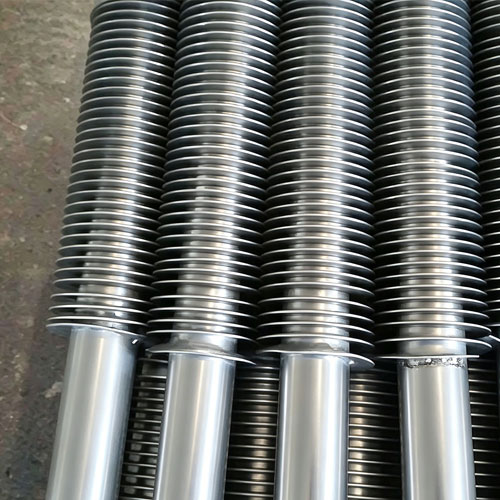
A high-frequency welded stainless steel finned tube is usually composed of two main parts: the base tube and the fins. The base tube carries steam, hot water, thermal oil, cooling water, or process fluid, while the fins enlarge the external heat transfer area. The structure is widely used in air heating, gas cooling, drying, heat recovery, and industrial radiator systems.
Common base tube materials include 304, 304L, 316, and 316L stainless steel. Fin materials are often 304 stainless steel strip or 316L stainless steel strip. These materials are selected for corrosion resistance, cleanability, and compatibility with humid or mildly corrosive working environments. For buyers searching for a High-frequency welded stainless steel 304L 316L finned tubes China manufacturer, material traceability and wall thickness consistency are especially important.
Typical size ranges cover base tube diameters such as φ25, φ38, φ45, φ57, φ76, and φ89 mm, with wall thickness from 2.0 to 4.0 mm. Fin height usually ranges from 8 to 20 mm, fin thickness from 0.5 to 1.0 mm, and fin spacing from 3 to 10 mm. Fixed tube lengths are commonly 3 to 9 m, depending on heat exchanger layout and site installation conditions.
| Item | Common Range | Engineering Consideration |
|---|---|---|
| Base Tube Material | 304, 304L, 316, 316L | Selected according to corrosion level, medium, and temperature |
| Base Tube Diameter | φ25, φ38, φ45, φ57, φ76, φ89 mm | Affects flow capacity, pressure drop, and bundle layout |
| Wall Thickness | 2.0–4.0 mm | Related to pressure resistance and service life |
| Fin Material | 304 or 316L stainless steel strip | Impacts oxidation resistance and cleaning performance |
| Fin Height / Thickness | 8–20 mm / 0.5–1.0 mm | Balances heat transfer area, strength, and air resistance |
| Fin Spacing | 3–10 mm | Smaller spacing increases area but must consider dust blockage |
Changzhou LanChen also supports customized designs for pipe diameter, fin height, fin spacing, material grade, fixed length, serpentine tubes, longitudinal tubes, and special-shaped tubes. This flexibility is useful for companies comparing custom 304 316L stainless steel finned tube wholesale China suppliers for both standard replacement parts and new equipment design.
Traditional high-frequency welded, wound, or embedded finned tubes may show reduced bonding strength when exposed to high temperature, vibration, and repeated thermal shock. In some cases, small gaps or shallow fusion areas develop at the fin root, increasing thermal resistance and raising the risk of fin loosening. For systems that must operate continuously, these defects can lead to shutdown inspection, tube replacement, or declining heat exchanger output.
Changzhou LanChen uses automated laser fusion welding for stainless steel finned tubes. The fins and base tubes are welded with full penetration, with a penetration depth greater than 0.2 mm and a 100% welding bonding rate in the fin-tube contact area. Compared with conventional high-frequency welded tubes, this structure reduces contact thermal resistance and supports more stable heat transfer during long-term operation.
The laser-welded design also allows tighter fin spacing. Changzhou LanChen can control fin spacing at ≤1.8 mm in suitable applications, expanding heat dissipation area by more than 50% compared with traditional high-frequency welded finned tubes. In compact equipment, this can reduce the size of assembled heat exchange units by up to two-thirds, while fin thickness controlled at ≤0.5 mm can reduce material consumption by more than 50% in certain designs.
For customers evaluating a High-frequency welded stainless steel 304L 316L finned tubes China manufacturer, the question is not simply whether high-frequency welding or laser welding is “better” in every case. The practical issue is whether the selected process fits the actual temperature, pressure, corrosion, dust, and maintenance requirements of the project.
One common product pain point is fin detachment. In high-temperature gas, boiler flue gas, drying tunnels, and chemical exhaust systems, traditional finned tubes may experience virtual welding, shallow fusion, or local separation after repeated expansion and contraction. Once the fins loosen or warp, the heat transfer area becomes ineffective, and the heat exchanger may fail to meet its designed output.
Another long-term issue is declining heat transfer efficiency. Dust, oxide layers, and small gaps at the weld joint increase thermal resistance over time. A system may perform acceptably after installation but gradually consume more steam, fuel, or electricity to achieve the same process temperature. In plants with energy-saving targets, this hidden efficiency loss becomes a measurable operating cost.
Policy and environmental pressure also influence finned tube selection. Many industrial facilities now face stricter requirements for waste heat recovery, ultra-low emissions, and energy consumption control. If a heat exchanger cannot maintain efficiency under dusty, sulfur-containing, humid, or high-temperature conditions, the facility may need additional cleaning, higher fan power, or earlier equipment replacement.
Supply chain risk is another concern. Some buyers report inconsistent material thickness, false labeling of welding processes, or non-standard fin density in the market. For a procurement team searching for a High-frequency welded stainless steel 304L 316L finned tubes China manufacturer, these hidden differences may not be obvious until installation, acceptance testing, or long-term operation.
Changzhou LanChen has three sets of laser welding machines and an annual production capacity of 400,000 meters of finned tubes. This capacity helps reduce the risk of long delivery cycles, especially for customers balancing project schedules with customized 304 or 316L stainless steel finned tube requirements.
In textile dyeing, printing, and coating lines, finned tubes are often exposed to lint, oil mist, moisture, and repeated temperature changes. Conventional tubes with rough fin roots may collect deposits quickly, increasing maintenance frequency. For one textile dyeing project using stainless steel laser-welded finned tubes, the smooth tube surface reduced lint and oil residue accumulation, and the maintenance team reported longer cleaning intervals during continuous production.
In a technical textile coating line, compact laser-welded finned tube bundles with fin spacing ≤1.8 mm were used to increase heat exchange area within the existing cabinet. Compared with the previous arrangement, the heat dissipation area increased by more than 50%, and the assembled heat exchanger volume was reduced by about two-thirds. A production manager from a textile finishing company noted that line speed became easier to stabilize because hot air distribution was more consistent during peak operation.
Chemical and synthetic fiber plants often require corrosion resistance and stable temperature control. In applications such as nylon process coolers, chemical vapor condensation, acrylic fiber solvent recovery, and polymerizing heat exchangers, stainless steel finned tubes must work under humid, corrosive, or thermally stressful conditions. Changzhou LanChen has supplied stainless steel laser-welded finned tube assemblies for these types of projects, where zero fin-to-tube separation and controlled dimensions support more predictable equipment operation.
In grain and oil processing, steam radiators and oil drying heat exchangers often face frequent load changes. A grain and oil processing facility using stainless steel laser-welded finned tubes reported steadier thermal output after replacing older heat exchange components. Based on operating records shared during equipment review, cleaning workload was reduced by around 30%, while drying section temperature recovery improved by about 25% during production changeovers.
A waste heat power generation demonstration project using supercritical CO₂ technology required small-diameter stainless steel spiral finned tubes for a customized flue gas heat exchanger. Conventional high-frequency welding could create issues such as insufficient tensile strength at the fin-tube interface, darkened tube surfaces, and bending deformation. Changzhou LanChen’s laser-welded finned tubes addressed these concerns through full bonding, high joint strength, non-discolored surfaces, and controlled deformation, supporting the long-term reliability of the heat exchanger.
Changzhou LanChen Environmental Equipment Co.,Ltd. has obtained ISO9001 Quality Management System Certification, based on GB/T19001:2016 / ISO9001:2015. The certification scope covers the production of finned tubes. For industrial buyers, this provides a structured reference for production management, process control, and quality consistency.
The certification information can be verified through the official platform of the Certification and Accreditation Administration of China. This is useful for procurement teams that need supplier qualification documents before project approval, especially when sourcing from a custom 304 316L stainless steel finned tube wholesale China supplier for engineering equipment or OEM heat exchanger production.
Beyond certification, measurable process data is important. Changzhou LanChen’s laser-welded finned tubes are associated with a penetration depth greater than 0.2 mm, 100% welding bonding rate, fin spacing down to ≤1.8 mm in selected designs, and fin thickness down to ≤0.5 mm. These figures help engineers compare not only price, but also heat transfer area, equipment footprint, material consumption, and maintenance expectations.
A maintenance manager from a chemical processing facility summarized the experience in practical terms: “The earlier heat exchanger required frequent ash cleaning, and heat transfer dropped noticeably after several months. After switching to smoother stainless steel finned tube bundles, the pressure resistance of the air path stayed more stable, and our inspection cycle became easier to plan.” This type of feedback reflects how welding quality affects daily operation rather than only factory inspection data.
When comparing suppliers, buyers should first confirm whether the product is high-frequency welded, laser-welded, wound, or embedded. Each process has suitable applications, but the naming must be accurate. If a buyer requests a High-frequency welded stainless steel 304L 316L finned tubes China manufacturer, the supplier should clearly state welding type, material grade, tube wall thickness, fin dimensions, and applicable working conditions.
Material confirmation is equally important. 304L and 316L stainless steel are often selected for corrosion-sensitive environments, but performance depends on actual composition, wall thickness, weld quality, and the medium being handled. For sulfur-containing flue gas, humid exhaust, acidic or alkaline gas, and chemical vapor, the engineering team should evaluate whether 316L, alloy steel, ND steel, or another material is more appropriate.
Dimensional consistency affects both installation and heat exchange performance. Small deviations in tube diameter, fin height, fin spacing, or straightness can create assembly problems in tube sheets, headers, and compact heat exchanger housings. Changzhou LanChen’s automated production and customization capability help reduce these risks, particularly for non-standard equipment renovation and replacement projects.
Finally, buyers should consider long-term cost rather than unit price alone. A finned tube that reduces equipment volume by two-thirds, expands heat transfer area by more than 50%, or cuts maintenance workload by 30% may change the total economics of a project. For heat recovery, drying, and boiler-related systems, stable efficiency over time often matters more than the initial material cost difference.
The market for stainless steel finned tubes includes high-frequency welded, laser-welded, wound, and embedded structures. For many standard applications, traditional specifications remain useful. But in high-temperature, high-pressure, dusty, corrosive, or space-limited systems, the functional requirements are more demanding, and the welding method directly affects bonding strength, heat transfer stability, cleaning frequency, and service life.
Changzhou LanChen combines radiator and cooling coil manufacturing experience with automated laser-welded finned tube production. Its stainless steel finned tubes offer full fin-to-tube bonding, smooth welds, compact spacing options, material flexibility, and standardized quality management under ISO9001. These features help engineers evaluate whether a conventional High-frequency welded stainless steel 304L 316L finned tubes China manufacturer specification is enough, or whether a laser-welded upgrade is more suitable for the working condition.
For projects involving waste heat recovery, textile drying, chemical heat exchange, boiler air preheating, grain drying, and environmental treatment equipment, Changzhou LanChen provides a practical reference point: select finned tubes according to real operating pressure, temperature, corrosion, dust load, and maintenance goals. That approach leads to more stable heat exchange performance and more predictable long-term operation.

Service hotline+86-519-83505830
Professional China Manufacturer & Supplier of Finned Tubes: Laser-Welded, High-Frequency Welded, Steel-Aluminum Composite, H-Type, Longitudinal, Inlaid Finned Tubes, and Serpentuator Tubes.
Copyright @ 2026-2036 Changzhou LanChen Environmental Protection Equipment Co., Ltd.