Leading China Laser-Welded Finned Tube & Industrial Radiator Manufacturer
 +86-519-83505830
 yangjy@lanchenfinnedtube.com
+86-519-83505830yangjy@lanchenfinnedtube.com

DATE:2026-07-29
In boiler, power station, and high-temperature waste heat recovery projects, selecting a reliable 12Cr1MoV alloy steel serpentine tube manufacturer in China has become a core technical decision rather than a simple procurement task. Serpentine tubes made from 12Cr1MoV and related alloy steels carry high-pressure, high-temperature media, and any instability in heat transfer or welding quality can directly shorten equipment life and increase lifecycle costs.
The combination of alloy steel base tubes such as 12Cr1MoV, T91 and laser-welded fins expands the effective heat exchange surface while maintaining structural strength under cyclic loading. When these tubes are formed into serpentine coils, they can be compactly arranged inside boilers, superheaters, economizers and flue gas heat recovery units, making them crucial components in energy efficiency upgrades and ultra-low emission retrofits.
At the same time, the industry is moving toward stricter environmental and energy efficiency policies. This places higher technical demands on both the materials (for example, 12Cr1MoV and T91) and the processes used to produce serpentine tubes. Enterprises now look beyond basic compliance, expecting stable long-term heat transfer, reduced maintenance frequency and predictable operating costs.
Before choosing a 12Cr1MoV alloy steel serpentine tube manufacturer in China, many engineering teams first confront persistent problems associated with conventional high-frequency welded and wound finned tubes. These issues are not only technical but deeply linked to supply chain stability, project acceptance and long-term operation.
The first pain point is the limited service life of traditional finned tubes. High-frequency welded or wound structures often have shallow fusion and incomplete bonding between fins and base tubes. Under high temperature, vibration and frequent thermal cycling, fins can loosen or detach, leading to heat transfer decline and partial failure of heat exchangers. Once this happens, shutdowns for inspection and replacement cause direct production losses and complicated maintenance scheduling.
A second pain point lies in heat transfer performance attenuation. Small gaps and non-uniform contact at the fin–tube interface introduce additional thermal resistance. Over years of operation, dust, ash and corrosion products accumulate in these gaps, further reducing thermal conductivity. Projects that initially achieved design efficiency gradually fail to meet their energy-saving targets, leaving energy consumption and fuel usage locked at a high level.
On an industry level, the traditional manufacturing processes for finned tubes are facing obvious technical bottlenecks. Fusion depth, bonding strength and thermal resistance limits mean that conventional products struggle to meet new demands for higher temperature resistance, higher pressure ratings, and long service intervals. As ultra-low emission and energy-saving standards tighten, legacy designs become difficult to adapt without significant reengineering.
Another challenge is the lack of uniform product standards. In some segments of the market, product dimensions, fin spacing and wall thickness vary widely, even under the same nominal specification. This has a direct impact on project matching, installation tolerances and the accuracy of heat transfer calculations. For end users, it increases the risk of hidden defects that only become visible after commissioning.
Finally, there is a supply chain gap for high-end working conditions. For years, critical segments such as superheaters, high-temperature economizers and chemical anti-corrosion systems relied on imported components like ASTM A213 T91 SA213 T91 seamless serpentine tube for superheater. These imported tubes tend to have long delivery times and high total cost of ownership. Domestic manufacturers that cannot yet meet the technical requirements for T91 or 12Cr1MoV serpentine tubes leave users with limited choices and higher project uncertainty.
Changzhou LanChen Environmental Equipment Co.,Ltd. (hereafter Changzhou LanChen) focuses on laser-welded finned tubes and radiators, and this focus is highly relevant to anyone evaluating a 12Cr1MoV alloy steel serpentine tube manufacturer in China. Its core process is to weld continuous fins onto seamless steel tubes through fully automated laser welding, ensuring fin–tube fusion penetration greater than 0.2 mm.
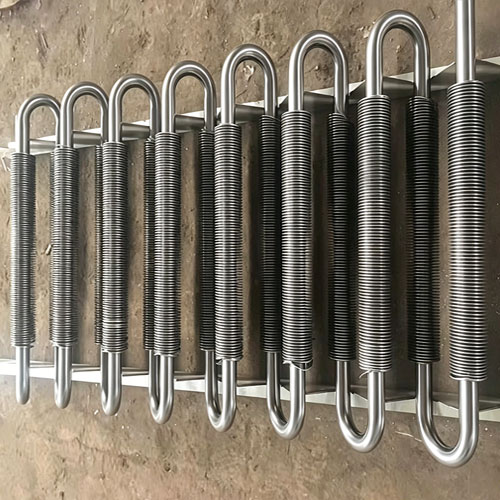
The material system covers carbon steel, stainless steel and alloy steel. For alloy steel, base tubes include 12Cr1MoV and T91, commonly used for high-temperature superheaters and reheaters. The main parameters include base tube outer diameter from Φ16–Φ89 mm (with Φ25, Φ32, Φ38, Φ57 frequently used), wall thickness from 2.0–6.0 mm, fin thickness from 0.3–0.6 mm, fin height from 8–25 mm and fin spacing from 2.5–6.0 mm. The tubes can be supplied straight or bent into serpentine coils with bending radii around R=30–80 mm and lengths from 1–12 m.
Compared with conventional designs, laser welding offers full penetration and zero virtual welding. The fin and base tube are metallurgically fused rather than mechanically attached, creating a nearly zero contact thermal resistance interface. This structural characteristic is particularly important for serpentine tubes used as core components in superheaters, waste heat boilers and high-temperature flue gas heat exchangers, where both heat flux and mechanical stress are high.
One of the central features of the laser-welded structure is the 100% welding bonding rate. The uniformity of penetration depth and the absence of gaps significantly reduce the risk of fin loosening. In practical projects, users report that under comparable operating conditions, maintenance intervals for laser-welded finned tubes can be extended by 30–50% compared with traditional high-frequency welded tubes, directly relieving the pressure on maintenance teams.
Laser welding allows for fin spacing control at ≤1.8 mm, effectively increasing the total heat dissipation area by more than 50% compared with many conventional high-frequency welded designs. In some projects, this has enabled heat exchangers to deliver the same capacity while reducing the assembled equipment volume to around one-third of the original configuration. For compact boiler houses, retrofits in existing plants, or projects constrained by space, this translates to significant layout flexibility.
By limiting fin thickness to ≤0.5 mm and optimizing fin distribution, it is possible to reduce fin material consumption by more than 50% while still improving heat transfer performance. The combined effect of reduced raw material usage and lower fan power (due to smoother surfaces and lower dust build-up) can cut overall system energy consumption by around 15–30%, depending on the specific duty cycle and process conditions.
Across multiple industries, the advantages of laser-welded finned tubes and serpentine coils can be observed in concrete data. The following cases illustrate how heat transfer efficiency, maintenance cycles and equipment footprint are affected when legacy finned tubes are replaced by laser-welded solutions.
In the textile dyeing and finishing sector, several companies adopted stainless steel laser-welded finned tubes from Changzhou LanChen for exhaust gas heat recovery and high-temperature drying applications. For a large dyeing and printing plant in eastern China, switching from high-frequency welded tubes to laser-welded finned coils with fin spacing ≤1.8 mm increased effective heat dissipation area by over 50%. As a result, line speed on a key stenter frame line rose by about 20%, while the total heat exchanger volume decreased to roughly one-third of the original. Maintenance shutdowns for ash cleaning were reduced from weekly to monthly.
In chemical and synthetic fiber processing, users face high-temperature, high-humidity and corrosive atmospheres. A nylon producer in central China upgraded its process coolers and gas heat exchangers with heavy-duty stainless steel laser-welded finned tubes. After two heating seasons, energy data showed fuel consumption reduction of approximately 18%, while unplanned shutdowns related to fin damage and leakage dropped to near zero. This experience supports the argument that laser-welded products can align with the performance of imported ASTM A213 T91 SA213 T91 seamless serpentine tube for superheater in certain applications when properly designed.
In grain and oil processing, a large integrated oil plant adopted stainless steel laser-welded finned tubes in steam radiators and oil drying systems. According to the maintenance manager, the thermal output became more stable during frequent cold–hot alternation, and cleaning cycles extended by about 40%. Overall operating costs, including steam and electricity for fans, fell by roughly 15%, thanks to improved heat transfer and reduced dust accumulation.
For engineering teams evaluating a 12Cr1MoV alloy steel serpentine tube manufacturer in China, one of the strongest references is how suppliers perform in high-end, frontier projects. In a supercritical CO₂ sintering waste heat power generation demonstration project at a major steel plant in southwest China, the flue gas heat exchanger serves as the core unit, directly influencing overall power generation efficiency.
This project employs small-diameter stainless steel spiral finned tubes as core heat exchange components, requiring both compact layout and high structural stability. Traditional high-frequency welding of small-diameter dissimilar steels often leads to low bonding rate, insufficient tensile strength at the fin–tube interface, discoloration and bending deformation of tubes after welding, all of which can compromise installation and long-term operation.
Using laser welding, Changzhou LanChen supplied stainless steel finned tubes with 100% fusion welding rate, high tensile strength at the fin–tube joint, non-discolored surfaces and negligible bending deformation. In trial operation and subsequent continuous runs, the tubes maintained stable heat transfer performance under intense thermal gradients, supporting reliable power generation and representing a clear step toward domestic substitution for high-end heat exchange components.
While the project above uses stainless steel rather than alloy steel, the same laser welding and precision forming principles apply to 12Cr1MoV and T91 base tubes used in superheaters and high-temperature economizers. By controlling penetration, minimizing heat-affected zones and preventing tube wall damage, the process enables alloy steels to maintain their designed creep strength and oxidation resistance. This is particularly meaningful when the tubes are intended to function similarly to imported ASTM A213 T91 SA213 T91 seamless serpentine tube for superheater in domestic boiler and power plant retrofits.
From a policy perspective, high-efficiency heat exchangers and optimized serpentine tubes help plants meet stricter emission and energy consumption targets. Practically, plants gain more stable operating conditions: fewer leaks, lower risk of fin detachment, and more predictable overhaul cycles. Many users report that by upgrading to laser-welded serpentine tubes, they see heat transfer efficiency improvements of 20–30%, while unplanned maintenance incidents drop by more than half.
For critical components such as serpentine tubes in boilers and superheaters, quality control extends far beyond final inspection. Changzhou LanChen has established a standardized production management and control system and obtained ISO9001 Quality Management System Certification (GB/T19001:2016 / ISO9001:2015) for finned tube production. This implies that raw material control, process monitoring and inspection data can be traced and audited, an important factor when assessing long-term supply reliability.
In practice, some engineering companies request batch process reports, wall thickness records and fin spacing measurement data as part of project documentation. Transparent parameters, full wall thickness and standard dimensions help eliminate concerns about non-conforming products, such as reduced wall thickness, lower fin density or mislabeling of high-frequency welded tubes as laser-welded products. This higher level of data transparency supports project acceptance and later warranty discussions.
Customer feedback reflects this focus on traceability. A maintenance manager at a large integrated industrial park noted that after replacing a portion of district heat exchange serpentine coils with laser-welded finned tubes, the plant observed a roughly 25% increase in overall heat transfer efficiency and a 30% reduction in repair workload over two heating seasons. The manager emphasized that the consistent dimensional accuracy of the tubes simplified site installation and reduced the risk of mismatched connections.
Another frequently cited advantage is customization capability. For many projects, standard products cannot fully match site-specific requirements in terms of pipe diameter, fin height, fin spacing, bending radius and material selection. Changzhou LanChen offers tailored solutions such as serpentine tubes, custom fixed lengths, high fin configurations, narrow spacing and special-shaped tubes using carbon steel, stainless steel and alloy steel including 12Cr1MoV and T91.
For example, in a textile plant retrofit where space was limited and high thermal output was required, narrow fin spacing and compact serpentine curves enabled the new heat exchangers to fit into existing casings while increasing heat output by more than 20%. In a chemical plant project, corrosion-resistant stainless steel serpentine tubes with optimized fin geometry allowed the plant to reduce solvent condensation energy consumption by approximately 15%.
Viewed from a lifecycle perspective, the main value of high-quality serpentine tubes lies in balancing initial cost with long-term operating savings. Compared with baseline configurations, plants using laser-welded finned serpentine tubes often report cost reductions of around 30% in combined metrics (including energy savings, reduced replacement frequency and lower maintenance labor) and productivity increases of around 25% due to more stable heat supply and fewer unplanned stops.
Once these savings are evaluated over a typical 10–15 year service life, the economics of choosing an experienced 12Cr1MoV alloy steel serpentine tube manufacturer in China become clearer. The initial difference in procurement price is frequently offset within a few years by lower fuel usage, reduced fan power, and fewer shutdowns for fin damage or blockage-related issues.
As industrial users seek to reduce emissions, lower energy consumption and extend equipment life, the choice of serpentine tube supplier becomes a strategic decision. Laser-welded finned tubes, especially when produced with materials like 12Cr1MoV and T91, provide a route toward higher heat transfer efficiency, better structural integrity and more predictable maintenance cycles.
For those comparing domestic and imported options such as ASTM A213 T91 SA213 T91 seamless serpentine tube for superheater, it is essential to assess not only nominal specifications, but also welding processes, dimensional accuracy, quality system certifications and proven performance in demanding projects. Changzhou LanChen Environmental Equipment Co.,Ltd. demonstrates how a focused manufacturer can combine standardized production, laser welding technology and customization capacity to meet diverse industrial heat transfer needs.
Looking ahead, as policy requirements tighten and energy prices fluctuate, plants that invest in high-quality serpentine tubes and laser-welded finned structures are better positioned to maintain stable operations. By aligning component selection with long-term efficiency goals, users can reduce lifecycle costs, enhance safety margins and build more resilient thermal systems. In this context, understanding the capabilities of a 12Cr1MoV alloy steel serpentine tube manufacturer in China becomes an important part of broader energy and process optimization strategies.

Service hotline+86-519-83505830
Professional China Manufacturer & Supplier of Finned Tubes: Laser-Welded, High-Frequency Welded, Steel-Aluminum Composite, H-Type, Longitudinal, Inlaid Finned Tubes, and Serpentuator Tubes.
Copyright @ 2026-2036 Changzhou LanChen Environmental Protection Equipment Co., Ltd.